.JPG)
miércoles, 9 de mayo de 2012

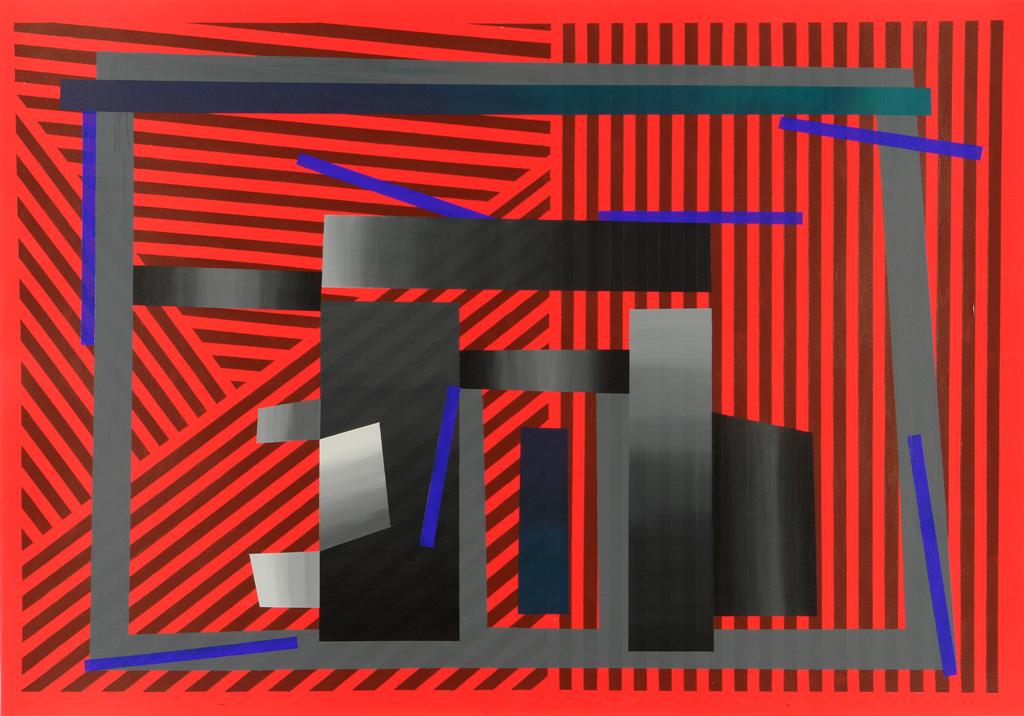
In search of a place
In search of a place
CRISTINA
ROCHAIX
Architectures
The interest for the aesthetic purpose was the beginning of
the course of the search from the plastic. The color, line, planes, spaces
are created to be. They begin to have a role different as she transformed
into volumes, shapes and colors that change in
temperature. All these plastic elements begin to play each other and
occupy a place in the web.
After the concerns about the aesthetic and creative process, the issue
begins to appear. The issue that invokes a particular, personal and subjective view
then begins its history. Here comes the need to think about a subject that
is Stonehenge, the megalithic construction of the Neolithic
period about 3000 BC until today do not know its original
function. In her painting Stonehenge Forwarding green
spaces refer to the tranquility and calmness of their fields, but in this
case these spaces are delineated by red lines
that protect a specific area. This perimeter is pregnant to the viewer’s
eyes acts as a border and carefully chosen where man can shelter from the
contingencies of the world.
That's how Cristina Rochaix starts thinking in architecture.
Now in Architectures significance of her works
will have another resonance for the viewer. If we begin to see
her paintings we see that there is a need to manage space, measure it,
confronting it with others where it is building a network of
lines. These form an area to be juxtaposed in the pictorial
space. This space appears before the lintel and the pillar as a portal
that represents the architecture of the origins of humanity. That is the
structure of three holding the entrance to her own artistic quest that
redefines the starting point of the creation process.
This way of constructing basic architecture that firmly held
the first buildings here has pronounced instability given by lines crossing the
input or lintels that rest on the pillars not realizing a
function not logic elements that disrupt the construction
system and jeopardize the refuge of man. This is where our artist connects
with our contemporaneity, showing the ambiguities, dissonances, obstacles and
suggesting new possibilities to the viewer, roads and cuts
unveiled. The movement of the eye between the elementary forms
through the various directions focused on the movement and
sensation. Thus involving the web space, realizing a world to learn and a
place to look for to be.
Mrs. Maria Alejandra Sculli
miércoles, 30 de noviembre de 2011
Noviembre en PROA
http://proa.org/esp/events/2011/11/encuentro-internacional-dioses-ritos-y-oficios-del-mexico-prehispanico/
COLOQUIO INTERNACIONAL DIOSES, RITOS Y OFICIOS DEL MÉXICO PREHISPÁNICO
PATRICIA CASTILLO PEÑA, LAURA FILLOY NADAL, SARA LADRÓN DE GUEVARA Y LEONARDO LÓPEZ LUJÁN
http://proa.org/esp/events/2011/11/encuentro-internacional-dioses-ritos-y-oficios-del-mexico-prehispanico/


sábado, 19 de noviembre de 2011

martes, 15 de noviembre de 2011
Curso
CePA: CURSO REGULAR CUATRIMESTRE 2012
Sede D.E. 10 Belgrano
Curso regular. Subnúcleo Artes
Titulo: La Imagen prehispánica en América del Sur
Síntesis de la temática
Abordaremos la imagen andina desde la cultura material, el
tiempo y el espacio arqueológico. Transitaremos por las culturas como Chavín,
Moche, Paracas, Nazca, Tiahuanaco, Aguada, Incas para reconstruir sus prácticas
y procesos sociales desde el espacio doméstico en relación al paisaje
natural. Haremos hincapié en el uso de estas imágenes como herramientas de diferentes
propuestas didácticas que incentiven al conocimiento y la integración de
la educación multicultural.
Suscribirse a:
Entradas (Atom)